Introduction:
Cantonese cuisine, also known as Cantonese cuisine, is one of the four major cuisines and eight major cuisines in China. Cantonese cuisine includes Cantonese cuisine (also known as Guangzhou cuisine), Chaozhou cuisine (also known as Chaoshan cuisine), Dongjiang cuisine (also known as Hakka cuisine), and Cantonese cuisine.
粤菜即广东菜,是中国四大菜系、八大菜系之一。粤菜包括广府菜(即广州府菜)、潮州菜(又称潮汕菜)、东江菜(又称客家菜)、粤西菜。
Development history:
origin
Guangdong has a particularly rich variety of products, which are readily available and can be cooked and eaten, resulting in a preference for fresh and lively eating habits. With historical changes and dynastic changes, immigrants from the Central Plains continued to migrate southward, bringing about a Central Plains culinary style of "not being tired of fine food, not tired of fine food".
起源
广东物产特别丰富,唾手可得,烹而食之,由此养成的喜好鲜活、生猛的饮食习惯。随着历史变迁和朝代更替,中原移民不断南迁,带来了“烩不厌细,食不厌精”的中原饮食风格。
formation
The continuous migration of immigrants from the Central Plains to the south has brought about a Central Plains culinary style that is "never tired of eating fine food and never tired of eating fine food". Over the long years, Guangdong has not only inherited the tradition of the Central Plains food culture, but also absorbed the essence of foreign and all aspects of cooking. Then, according to the local tastes, hobbies and habits, it has constantly absorbed, accumulated, improved and innovated, thus forming the food characteristics of various dishes, exquisite cooking, and good quality and taste. In the past century, it has become one of the most representative and globally influential culinary cultures in China.
中原移民不断南迁,带来了“食不厌精,脍不厌细”的中原饮食风格。漫长的岁月,使广东既继承了中原饮食文化的传统,又博采外来及各方面的烹饪精华,再根据本地的口味、嗜好、习惯,不断吸收、积累、改良、创新,从而形成了菜式繁多、烹调考究、质优味美的饮食特色。近百年来已成为国内最具代表性和最有世界影响的饮食文化之一。
develop
The culinary culture of Guangdong is closely related to various parts of the Central Plains. The Central Plains culinary culture brought by immigrants throughout history, especially during the Song Dynasty, saw a large number of Central Plains immigrants migrate southward to the Pearl River Delta. After the Southern Song Dynasty, the skills and characteristics of Cantonese cuisine became increasingly mature. This is related to the southern migration of the Song Dynasty, where numerous imperial and official chefs gathered in Guangdong, especially concentrated in Yangcheng.
After the Song and Yuan dynasties, Guangzhou became a port and city with concentrated domestic and foreign trade, and commerce flourished day by day, driving the development of catering services as a commercial industry, providing a very important condition and place for the growth of Cantonese cuisine, especially Cantonese cuisine.
广东的饮食文化与中原各地一脉相通,历代移民带来的中原饮食文化,尤其是宋代时期,中原移民大批南下珠三角 。南宋以后,粤菜的技艺和特点日趋成熟。这同宋朝南迁,众多御厨和官府厨师云集于粤,特别集中于羊城有关。
宋、元之后,广州成为内外贸易集中的口岸和港口城市,商业日益兴旺,带动了饮食服务作为一个商业行业发展起来,为粤式饮食特别是粤菜的成长提供了一个非常重要的条件和场所。
Local cuisine:
1. Guangfu cuisine:
Guangfu Cuisine refers to Guangfu Cuisine, which covers the whole the Pearl River Delta, Hong Kong and Macao. Guangfu cuisine combines local specialties such as Nanhai cuisine, Panyu cuisine, Dongguan cuisine, Shunde cuisine, Zhongshan cuisine, Wuyi cuisine, and combines the strengths of other provinces such as Beijing, Jiangsu, Yang, and Hangzhou, as well as Western cuisine, to form its own unique style.
1.广府菜: 广府菜即广州府菜 ,范围包括整个珠江三角洲、香港、澳门。广府菜集南海菜、番禺菜、东莞菜、顺德菜、中山菜、五邑菜等地方风味的特色,兼京、苏、扬、杭等外省菜以及西菜之所长,融为一体,自成一家。
2. Chaoshan cuisine
Chaoshan cuisine is distributed in the eastern region of Guangdong Province, including Chaozhou, Shantou, Jieyang, and Shanwei. After thousands of years of development, it has been influenced not only by Fujian cuisine, but also by Cantonese cuisine such as Guangfu cuisine and Hakka cuisine. It has also integrated and absorbed the flavors and cooking techniques of famous dishes from various regions, gradually converging the strengths of both Fujian and Guangdong, and forming its own unique flavor. It is rich in local flavor and is known for its proficiency in cooking seafood and emphasis on the original flavor. Seafood such as fish rice, crab rice, and lobster rice are chilled, with "freshness" as the soul. They are freshly made and served with various sauces and seasonings, making them clear but not light, fresh but not fishy, showcasing the most authentic and primitive taste of seafood.
潮汕菜分布在广东省东部地区的潮州、汕头、揭阳及汕尾等地 。发展历经数千年,发展过程中既受到闽菜较多的影响,又受到粤菜中的广府菜、客家菜等的影响,也溶合吸收各地名菜的风味和烹饪技术,渐渐地汇闽粤两家之长,风味自成一格 。它富有地方风味,以精于烹制海鲜、重视原汁原味而著称 。像鱼饭、蟹饭、龙虾饭之类的海鲜打冷,以“鲜”为灵魂,现捞现做,配以各种酱碟佐料,吃起来清而不淡,鲜而不腥,将海货最本味、最原始的味道展现得淋漓尽致。
3. Hakka cuisine
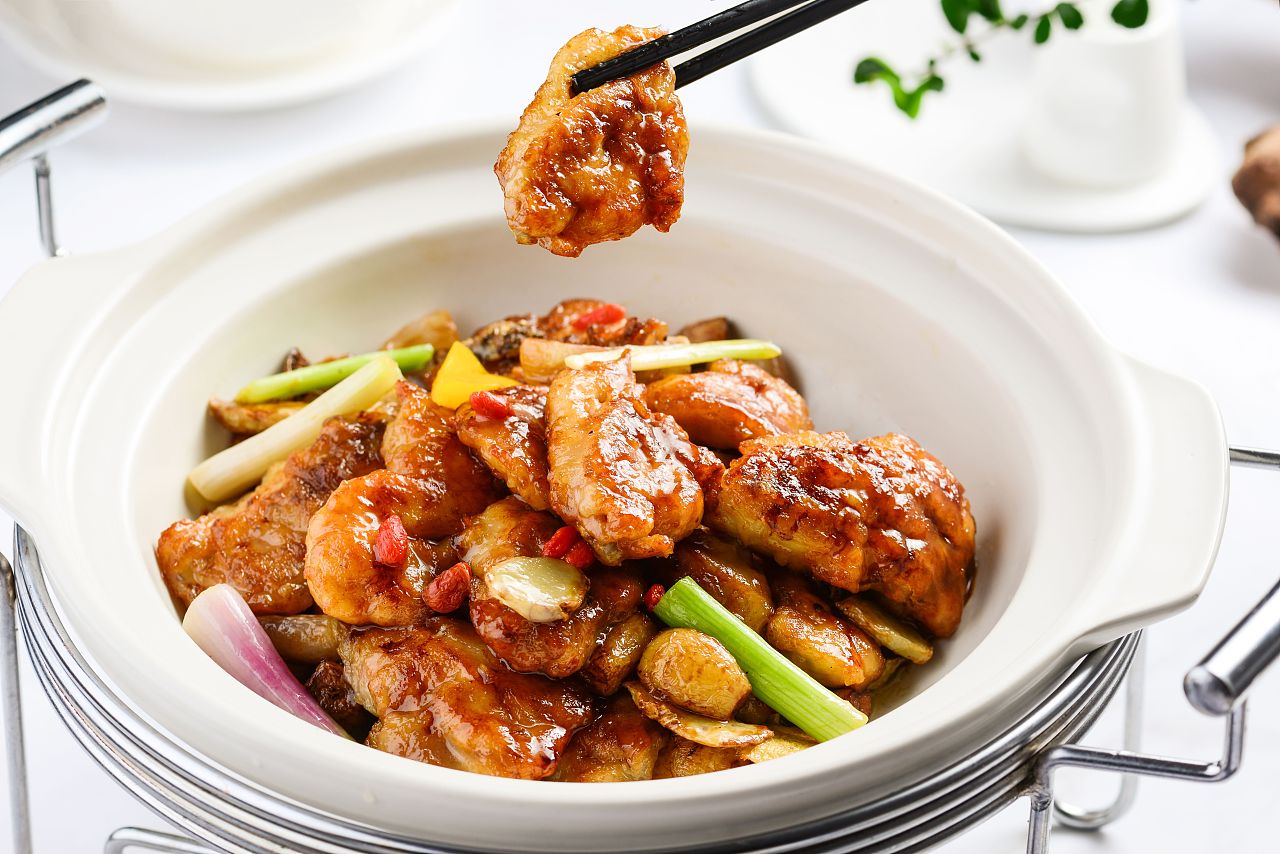
Hakka cuisine (also known as Dongjiang cuisine) is divided into five schools: Gannan style, Minxi style, Meizhou style, Dongjiang style, and Overseas style. Meizhou Pie is a representative of Hakka cuisine, and Dongjiang Pie is a branch of Hakka cuisine. It originated in the Hakka settlement area in Dongjiang, Guangdong. The dishes are mostly made of meat, with very little seafood, and the main ingredients are prominent. It emphasizes strong aroma, heavy oil, and salty taste, with a focus on clay pot dishes and a unique local flavor.
客家菜(又称东江菜)分成五个流派:赣南派、闽西派、梅州派、东江派、海外派。“梅州派是客家菜的代表,东江派是客家菜中的一派。起源于广东东江一带的客家人聚居地区,菜品多用肉类,极少水产,主料突出,讲究香浓,下油重,味偏咸,以砂锅菜见长,有独特的乡土风味。
4. Cantonese cuisine
Cantonese cuisine is represented by regions such as Zhanjiang, Maoming, and Yangjiang, where the dietary habits are similar. It stands out among Cantonese cuisine and has endless charm. The authentic Cantonese cuisine differs significantly from Guangfu cuisine, Chaoshan cuisine, and Dongjiang cuisine. Cantonese cuisine is boiled, roasted, and steamed in plain water, paired with refined and simple sauces for a return to simplicity. The taste can be summarized in four words: clear, fresh, fragrant, and tender.
粤西菜以湛江、茂名、阳江等地为代表,广东粤西等地饮食习惯相通。在粤菜中独树一帜,而韵味无穷。原汁原味的粤西美食,与广府菜、潮汕菜、东江菜有明显的区别。粤西菜以白水煮、灼、蒸,配以精制而简单的酱料蘸食,追求一种返璞归真的感觉,味道可以用清、鲜、香、嫩四字概括。
Food characteristics:
Cantonese cuisine has a precise and delicate dosage, numerous and exquisite ingredients, beautiful and colorful decorations, and is good at innovating through imitation. It has a wide variety of dishes, including 5457 introduced at the "Guangzhou Famous Cuisine and Delicious Point Exhibition" in 1965.
Cantonese cuisine emphasizes quality and taste, with a relatively light taste, striving for freshness and beauty in the middle. And it changes with the seasons, with a preference for light and light in summer and autumn, and a preference for rich and rich in winter and spring, pursuing color, fragrance, taste, and shape.
粤菜用量精而细,配料多而巧,装饰美而艳,而且善于在模仿中创新,品种繁多,1965年“广州名菜美点展览会”介绍的就有5457种之多。
粤菜注重质和味,口味比较清淡,力求清中鲜、淡中求美。而且随季节时令的变化而变化,夏秋偏重清淡,冬春偏重浓郁,追求色、香、味、型。